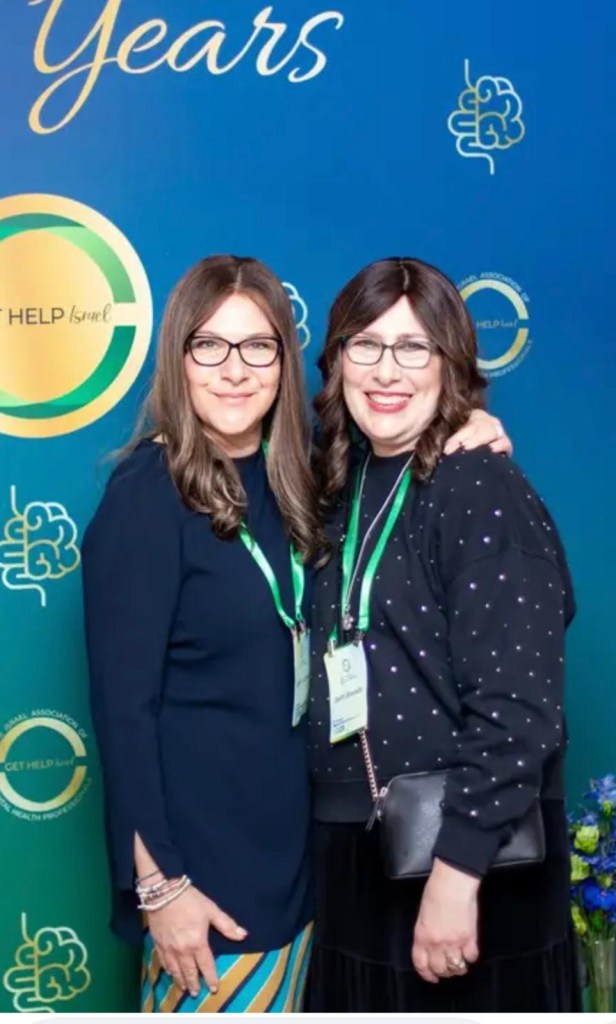
Reflections from the GHI Conference

In early December, I had the privilege of attending the GHI Mental Health Conference, where my book was showcased. What began as a professional opportunity turned into a deeply meaningful experience — one that blended scholarship, spirituality, and personal connection.

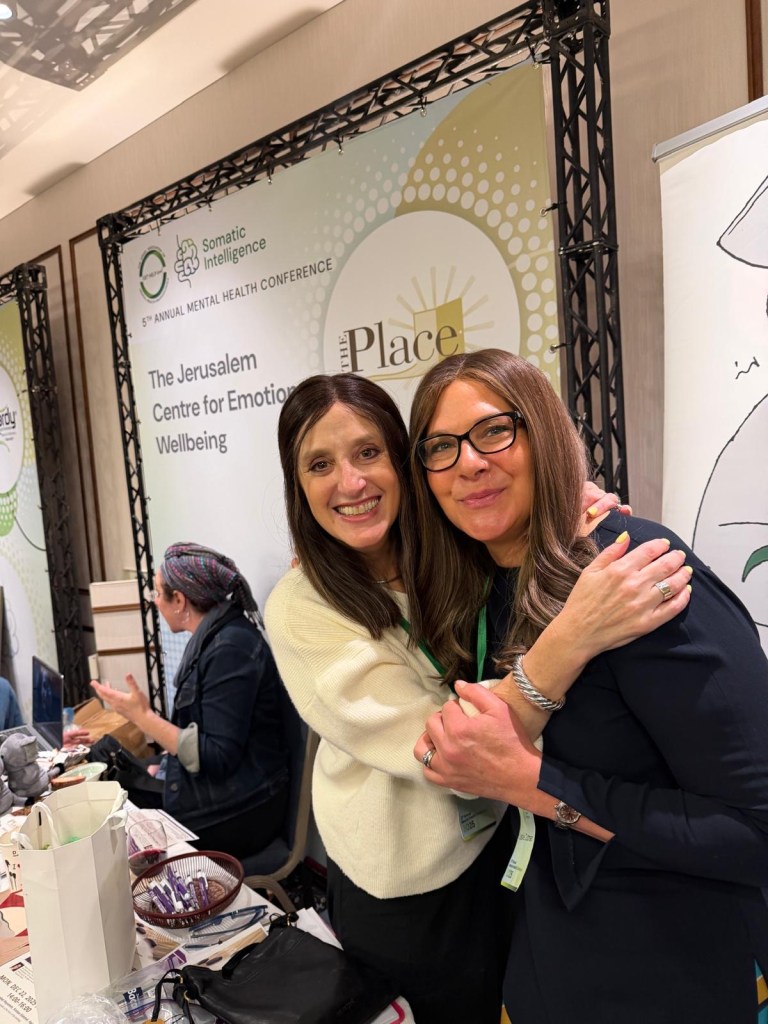
The conference was filled with purposeful moments: encounters with new and old friends, thought-provoking sessions, and even unexpected family bonding. It seemed divinely orchestrated that my sister happened to be there at the same time and wanted to go to the conference with me. Between sessions, we carved out moments for sisterly connection, weaving together the professional and the personal (see picture below). That balance, between intellectual engagement and human closeness, became a theme of the entire trip.

Pivotal Moments

Sasha Troufanov’s Testimony

The conference opened with Sasha Troufanov, a former hostage who endured 498 days in captivity. His words were unforgettable (paraphrased from my notes):


“Spirituality is something that cannot be taken away from you. Finding faith is what helped me to survive…The isolation was one of the most challenging parts…but being alone helped me to develop faith and my resilience. You are a new person; you can’t go back to the old you.”

Listening to him was both humbling and inspiring. He spoke of numbness upon release, of joy interwoven with sadness, and of the slow process of opening up again. His testimony reminded us that resilience is not about returning to who we were, but about embracing who we become.

For me, the most treasured moment of the trip was giving Sasha a copy of my book, telling him how much he is loved in London, and wishing him much bracha. It felt like a small gesture of solidarity, a bridge between his story and my research.  Another moment of Providence: I quoted his fiancée in the new edition of Resilience as an example of positive reframing.  

A Reunion

Years ago, Ali and I had planned an online talk for the first edition of my book, Resilience, but a snowstorm in Chicago prevented it.  Life carried us in different directions, and she eventually made aliyah. Meeting her by chance at the conference was a full-circle moment. We laughed at the serendipity and marvelled at how paths cross in unexpected ways.
The Mind-Body Connection

The most illuminating conference sessions explored how trauma manifests in the body. We learned about breathwork, visualization, micro-movements, and the role of micro-nutrients in healing.

A striking exercise asked us to identify one place on our bodies that felt comfortable. Many of us realized that our only “safe” spot was something as small as an earlobe or thumb. That revelation underscored how stress embeds itself physically, often unnoticed until we are asked to pay attention. It was a reminder that resilience is not only psychological but embodied — that healing requires attunement to the body as much as to the mind.

Sharing My Book

Throughout the conference, I spoke with attendees about resilience and spirituality. The conversations were energizing, and I sold every last copy of my book that I fit in my suitcase!

Many attendees wanted to learn more about the role of spirituality in building our resilience — how our “spiritual DNA” can be harnessed to support wellbeing.  It affirmed for me that resilience is not just an academic concept but a spiritual tool, especially in times of uncertainty. People are searching for how to blend science and spirit, and it was deeply rewarding to contribute to that dialogue.

Closing Reflections

The GHI Conference was more than a conference gathering; it was a convergence of resilience, spirituality, and human connection. From Sasha’s testimony to embodied lessons of trauma, from serendipitous reunions to sisterly bonding, and from sharing my book to witnessing others’ journeys, the experience reminded me of the profound ways we grow when we come together.

Resilience is not a solitary pursuit; it is cultivated in community, nourished by spirituality, and strengthened through both science and our shared stories. I left the conference not only with professional insights but with a renewed sense of purpose: to continue exploring how evidence-based strategies and spiritual wisdom can help us all navigate life’s challenges with strength and meaning.

When life sends a signal, listen closely

The Journey Behind the Second Edition of Resilience: Bouncing Forward with Jewish Wisdom and Psychological Science

Most of the time, life doesn’t offer clear instructions on how to proceed. Our next step is often hidden beneath layers of uncertainty, and we’re left wondering what to do, hoping for a sign.

This past spring, that’s exactly where I found myself with the first edition of my book Resilience. It had completely sold out, and I stood at a crossroads:

  • Should I reprint the first edition in hardback with my original publisher, Mosaica Press?
  • Republish the first edition in paperback on Amazon?
  • Or… update the book for 2025 as a second edition on Amazon—refresh the stories, simplify the structure, and make it more accessible?

The first option felt out of reach due to the expense.

With the third option, I knew that once I committed, I’d be all in. That’s how I operate: late nights, hyper focus, you know the drill.

So, I tested option two. I uploaded the original PDF to Amazon, but the formatting was off. That door closed quickly.

Then I reached out to the original publisher to reconsider the first option. And that’s when the signal came.

They told me that just that day, someone had contacted them asking to order 10 paperback copies. She was running a reading group at a women’s correctional facility and had found Resilience deeply helpful. But she could only bring paperback books into the facility.

That was my sign.

So, I chose option three. Over the summer, I rewrote much of the book. I added a new preface, fresh examples, a clearer structure, and more accessible language.

Resilience received a new cover and subtitle. I also included more of myself throughout the book, which felt a bit vulnerable(!), but my own journey now begins on page one.

I released the second edition one month ago, six months after my father’s passing.  I dedicated the book in his memory.

And then, the feedback began to arrive from the very women who inspired the second edition:

  • “You couldn’t have chosen a better book at this time. Maybe you’re a messenger.”
  • “Thank you for the book. It looks like a great book, and I’ve been praying every day for resilience for the past couple of weeks. We talked about it in our trauma class. It is a gift.”
  • “I am only on page 9 and I’m finding it insightful and a good read.”

I was told that one of the women blinked back tears as the group read through the book together.

I could have won a marathon and not felt more joy.

Then came the Amazon reviews, slow and steady. Here’s one that especially moved me:

“This book truly touched me. Dr. Leslie Gutman combines psychology and Jewish wisdom in a way that feels both timeless and completely relevant. Her approach to resilience isn’t about ‘bouncing back’—it’s about growing stronger and wiser through life’s challenges. The reflections and exercises helped me see my own struggles differently and reminded me of the power of faith, gratitude, and community. I read the whole book in one sitting; it was that good, but I’ll be going back over it more slowly to truly internalise its messages. A beautiful, uplifting guide for anyone seeking strength and meaning through the prism of Jewish thinking.”

Sometimes life whispers. Sometimes it shouts.

This time, God handed me a message, and I thankfully listened.

If you or someone you care about is navigating life’s challenges and seeking strength, clarity, and spiritual grounding, I invite you to explore the second edition of Resilience.

Resilience is now available in paperback on Amazon worldwide. Just head to the Book tab in the menu for links.

Does social media have you spiraling?

Boost your digital resilience with these 6 evidence-based strategies.

Social media can provide us with inspiration or wreak havoc on our mental health. It’s not just how long we spend online, it’s how we engage. Here are strategies backed by UK longitudinal research and public health guidance.
🧭 Use with intention, not habit.
Mindless scrolling activates dopamine loops similar to gambling. Setting app limits or ritualizing entry/exit can restore agency.
🧘 Monitor emotional impact.
Ask: “Do I feel better or worse after this?” Adults who reflect on their emotional responses are more likely to adjust use and protect wellbeing.
🧑‍🤝‍🧑 Prioritize meaningful engagement.
Passive viewing isn’t linked to distress, but frequent posting is. UK data shows daily posters had higher psychological distress scores a year later. Connection matters more than performance.
🧹 Curate your feed.
Social comparison is a known trigger for anxiety and low mood. Unfollow what drains you. Follow what supports you.
🌙 Protect your sleep.
Poor sleep is a major risk factor for depression. Try a tech-free wind-down with your phone off.
🛡️ Set boundaries around posting.
Posting invites feedback, which can trigger anxiety or rumination. Consider disabling comments, posting less often, or using private notes for self-expression.

Social media isn’t inherently harmful or healing; it’s a mirror. When we engage with intention, protect our mental health, and choose connection over social comparison, we reclaim that mirror as a tool for resilience. Let your digital habits reflect your values, not your vulnerabilities. And when in doubt, log out, look up, and return to what steadies you.